
Understanding 1/7 Scale: Figure Scale Denotations and Real-World Dimensions
A comprehensive guide to understanding figure scales like 1/7, calculating real-world height, and planning display space.
Understanding Scale Ratios in Figures
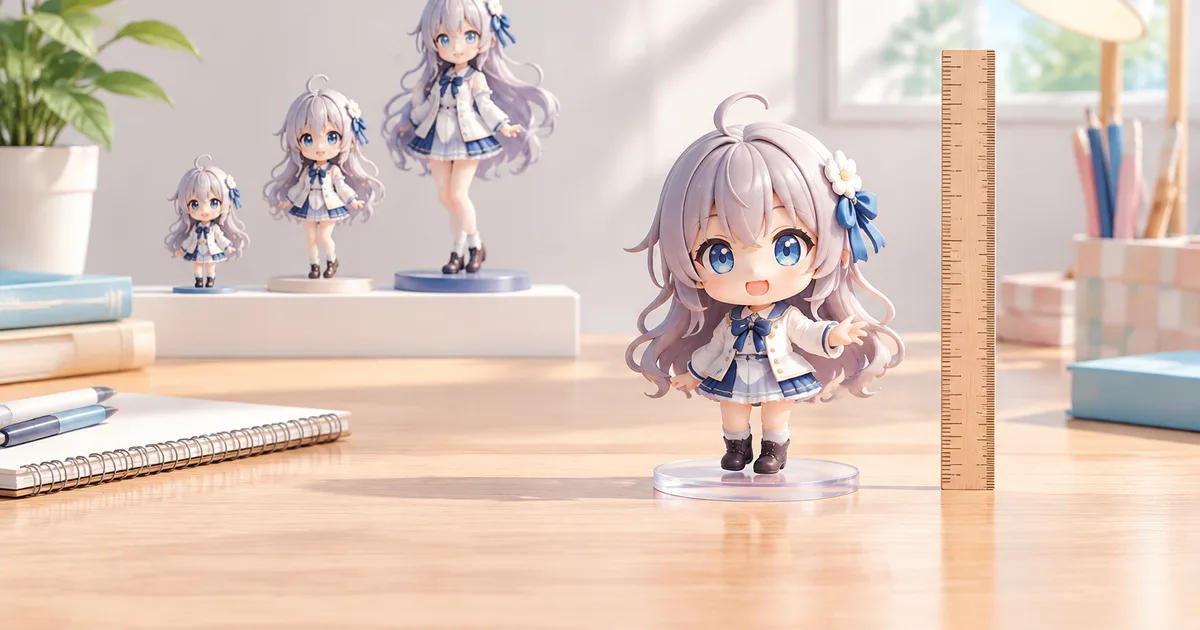
When browsing figure collections or ordering custom 3D prints, scale notation like 1/7, 1/6, or 1/8 serves as a standard mathematical indicator of size. Scale represents the exact proportional relationship between the physical figure and the subject's real-life (or canonical narrative) height.
A scale written as 1/7 (or 1:7) means the figure is produced at one-seventh of the original character's height. To calculate the physical height of a figure, divide the real or fictional height of the subject by the scale denominator.
- 1/7 Scale Calculation: If a character is canonically 160 cm tall, a 1/7 scale figure will stand approximately 22.8 cm tall (160 cm ÷ 7 = 22.85 cm).
- 1/6 Scale Calculation: For the same 160 cm character, a 1/6 scale figure measures roughly 26.6 cm tall (160 cm ÷ 6 = 26.66 cm).
- 1/8 Scale Calculation: A 1/8 scale version of that character measures around 20 cm tall (160 cm ÷ 8 = 20 cm).
Because figure scaling is based on the subject's height, two figures produced at the same 1/7 scale will differ in physical height if the characters themselves are different heights. A 1/7 scale figure of a 180 cm tall person will measure roughly 25.7 cm, whereas a 1/7 scale figure of a 150 cm child character will measure about 21.4 cm.
Popular Figure Scale Categories
Understanding standard scale classifications helps collectors anticipate physical space requirements and aesthetic compatibility on display shelves.
1/7 Scale
Widely considered the standard for detailed scale figures, 1/7 scale provides a balance between high visual detail and manageable physical footprint. Most standing 1/7 scale figures range between 22 cm and 26 cm in height (excluding dramatic bases or accessories). This size allows sculptors to capture subtle details in clothing folds, facial expressions, and hair strands without taking up excessive display room.
1/6 Scale
Standing between 25 cm and 30 cm tall, 1/6 scale figures are popular for high-end character statues and articulated action figures. The larger size accommodates finer textures, real fabric elements, and intricate painted features, but requires substantial vertical and horizontal shelf clearance.
1/8 Scale
Historically one of the most common standard scales, 1/8 scale figures typically stand between 18 cm and 22 cm tall. While slightly smaller than 1/7 scale, they offer good detail while occupying less shelf space, making them ideal for dense multi-figure displays.
1/12 Scale
Measuring around 13 cm to 15 cm tall, 1/12 scale is the dominant size for palm-sized articulated action figures and compact desktop displays. At this size, fine details are simplified, but figures are easy to handle, re-pose, and store.
Variables That Impact Actual Physical Dimensions
Calculating height using pure scale math provides a baseline estimate, but several factors alter the final overall height of a figure.
Poses and Gestures
Scale calculations assume the character is standing completely upright. If a figure is dynamic—such as crouching, sitting, running, or mid-jump—the total physical height will drop, while the total depth or width may increase significantly. A kneeling 1/7 scale figure might only stand 15 cm high, but require 20 cm of depth.
Proportion Styles
Proportions directly influence physical bulk and head-to-body ratios. For example, chibi figures distort standard human proportions by enlarging the head and shrinking the body. In custom 3D figure creation, style choice changes how scale is visually interpreted. According to FigMee's internal data based on 107 previews as of September 15, 2026, user style selections were distributed across anime (37%), chibi (37%), and realistic (25%). A chibi figure scaled to a specific height will appear significantly wider and bulkier than an anime or realistic figure of the exact same height.
Bases and Pedestals
Bases add physical height and footprint that are separate from the figure's character height. Elaborate bases featuring terrain, rocks, or thematic effects can easily add 3 cm to 10 cm of overall height. Conversely, flat acrylic discs or borderless mounts add minimal elevation. Based on FigMee's internal preview data of 107 previews as of September 15, 2026, 36% of figure previews selected no display base, opting instead for self-standing or minimal footing configurations.
Extended Elements (Hair, Hats, and Props)
Overhead accessories such as top hats, upright ears, floating magic effects, or weapons held aloft add to the vertical dimension. Always measure from the bottom of the base to the highest point of the sculpt rather than relying solely on the character's eye level or head height.
Planning Shelf Space and Measuring Dimensions
To ensure figures fit comfortably in glass cases, bookcases, or desktop setups, take precise measurements before committing to a scale:
- Measure Vertical Clearance: Measure the exact height between cabinet shelves. Standard glass display cabinets often have shelf heights around 38 cm, which comfortably fits most 1/7 and 1/6 scale figures. However, dynamic poses or tall bases may require adjusting shelf heights.
- Check Shelf Depth: Figures with wide poses, trailing capes, or large bases require adequate depth. Ensure there is at least 2 cm to 3 cm of buffer space between the figure and the cabinet door to avoid contact.
- Account for Lighting and Airflow: Avoid overcrowding shelves. Leaving open space around each figure highlights details and prevents accidental damage during cleaning or handling.
When ordering custom 3D-printed figures, services like FigMee offer free previews that allow customers to review the projected figure appearance and proportions before finalizing production.
FAQ
Is a 1/7 scale figure always 23 cm tall?
No. A figure's total height depends on the canonical height of the character, the pose (standing vs. sitting), and any added height from hats, hair, or display bases. A 1/7 scale figure of a tall character standing upright will be taller than 23 cm, while a crouching character of the same scale will be shorter.
What is the difference between scale and non-scale figures?
Scale figures strictly maintain proportional dimensions based on a character's canon height using a fixed mathematical ratio like 1/7. Non-scale figures do not adhere to a specific ratio; instead, they are sculpted to a predetermined height standard (such as 10 cm for chibi figures) regardless of how tall or short the original character is supposed to be.
How should I measure my display shelf before buying a 1/7 scale figure?
Measure the clearance height from the top of the lower shelf to the bottom of the upper shelf, then subtract at least 3 to 5 cm to ensure comfortable headroom. Additionally, measure the depth of the shelf to ensure wide bases, capes, or extended arms will fit behind cabinet doors without touching the glass.
Want to turn a photo into a figure?
Previews are free. Order only once you're happy with what you see.
Try it for free