
Choosing Between FDM and SLA 3D Printing: Layer Marks, Strength, and Cost from a Buyer’s View
A practical comparison of FDM and SLA printing focusing on visible layer lines, durability, and price differences for consumers.
Introduction
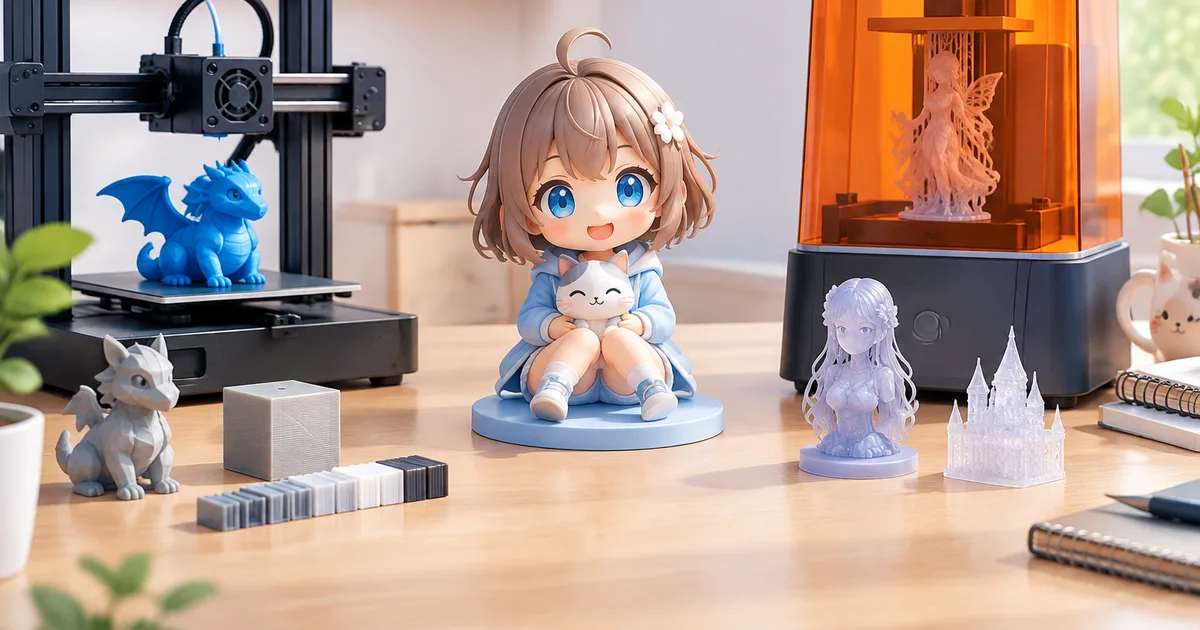
When you order a custom 3D‑printed figure from a service like FigMee, the technology used to create the part has a direct impact on how it looks, how long it will last, and how much you pay. The two most common desktop processes are Fused Deposition Modeling (FDM) and Stereolithography (SLA), sometimes called resin or light‑cured printing. Both have matured over the past decade, but they still leave distinct footprints on the final product. This article walks through the three factors most often asked about by buyers—layer visibility, mechanical strength, and price—and explains where the differences originate.
Visible Layer Marks (Surface Finish)
How the processes build layers
- FDM extrudes molten thermoplastic through a nozzle that moves in a raster pattern. Each pass deposits a bead of plastic that solidifies quickly. The bead width (usually 0.2–0.4 mm) defines the smallest detail the printer can reproduce, and the printer’s layer height (often 0.1–0.3 mm) determines the step‑like surface you can see with the naked eye.
- SLA cures a liquid photopolymer layer by layer with a UV laser or projector. The resin pool is only a few microns thick per layer (commonly 0.025–0.1 mm), so the resulting surface is much smoother. After printing, the part is washed and cured, which removes most uncured resin and further flattens the surface.
What buyers notice
- Layer lines: FDM parts typically show a faint ridge pattern when held up to light. The pattern is more pronounced on sloped surfaces or on models with fine curvature. SLA parts often appear almost glass‑like, with only subtle ripples that are usually only visible under magnification.
- Post‑processing: Both technologies benefit from sanding, priming, and painting. However, SLA parts require a wash step (usually isopropyl alcohol) and a UV cure, while FDM parts may need a brief heat treatment to relieve internal stresses. If you are planning to paint a figure, the smoother SLA surface can reduce the amount of sanding needed, but it also makes the part more brittle during handling.
Mechanical Strength
Material properties
- FDM thermoplastics such as PLA, PETG, and ABS have well‑documented tensile strengths ranging from 40 MPa (PLA) to 70 MPa (PETG). They are also relatively impact‑resistant, especially when printed with a higher infill percentage and thicker walls.
- SLA resins are cured polymers that can be formulated for rigidity, flexibility, or toughness. Standard clear or gray resins often have tensile strengths around 30–50 MPa, but they are more brittle than most FDM plastics. Specialized tough resins can approach the strength of ABS but are still less forgiving under impact.
How the build method influences durability
- Layer adhesion: In FDM, each new bead fuses to the previous one while still hot, creating a relatively strong interlayer bond. In SLA, the UV light cures each layer onto the one below, but the polymer chains do not intermix as thoroughly as molten plastic does, leading to a weaker bond in the Z‑direction.
- Anisotropy: Both processes produce parts that are strongest in the XY plane and weaker along the Z axis. For FDM, the difference is often modest if you use a high infill and proper print orientation. For SLA, the Z‑axis can be noticeably more fragile, especially on thin walls.
Practical advice for buyers
- Choose FDM if the figure will be handled frequently, displayed in a high‑traffic area, or if you need a higher impact resistance.
- Choose SLA if you prioritize fine detail and a glossy finish, and the figure will be kept in a protected environment (e.g., a display case).
Price Differences
Sources of cost
| Factor | FDM | SLA |
|---|---|---|
| Material | Thermoplastic filament (typically $20‑$40 per kilogram). | Liquid resin (typically $60‑$120 per liter). |
| Machine depreciation | Low‑cost desktop printers are common ($200‑$500). | SLA printers are usually more expensive ($500‑$2,000). |
| Post‑processing | Minimal (optional sanding). | Requires wash solvent and UV curing station. |
| Waste | Small filament scraps, often recyclable. | Resin waste must be handled as hazardous material. |
How the numbers translate for a consumer
Because filament is cheaper per kilogram and the printers are less expensive to own, FDM‑based quotes are generally lower. The price gap can be roughly 30‑50 % in favor of FDM for a comparable volume, though exact figures vary with model complexity and chosen material.
FigMee’s pricing model
FigMee does not disclose internal cost breakdowns, but it does offer free previews of each figure before you commit to a purchase. As of the latest data, FigMee has generated 720 figure previews in total, allowing customers to see the expected finish before paying. This practice helps buyers decide whether the added surface quality of SLA is worth the higher price.
When to Choose Each Technology
| Situation | Recommended process |
|---|---|
| High‑detail character with smooth skin, minimal handling | SLA |
| Large, structural parts or figures that will be moved often | FDM |
| Tight budget, acceptable surface finish after light sanding | FDM |
| Need for transparent or clear parts (e.g., glass‑like eyes) | SLA |
Further Reading
For a deeper technical dive, see the Wikipedia entries on Fused Deposition Modeling and Stereolithography.
FAQ
How noticeable are layer lines on an FDM‑printed figure?
Layer lines on FDM prints are usually visible as faint ridges, especially on curved surfaces. Light sanding and primer can reduce their appearance, but they rarely disappear completely.
Can I paint an SLA‑printed figure without it cracking?
Yes, provided you use a resin formulated for toughness and follow proper post‑cure procedures. Apply thin coats of paint and avoid heavy sanding, which can introduce micro‑cracks in the brittle resin.
Is the price difference between FDM and SLA always significant?
Generally, FDM is cheaper because filament costs less and the machines are less expensive. The gap can be 30‑50 % for similar-sized models, but exact pricing depends on material choice and finish requirements.
Does FigMee’s free preview guarantee the final quality?
The free preview shows a digital rendering of the chosen style and base. It helps you assess the visual outcome, but the actual tactile quality will still depend on whether you select FDM or SLA for the physical print.
Want to turn a photo into a figure?
Previews are free. Order only once you're happy with what you see.
Try it for free